
You don’t have to dream of making a three-foot vessel to appreciate the lessons hidden in large-scale work. In fact, some of the most important skills in ceramics become impossible to ignore as forms grow taller. Centering, compression, timing, wall thickness, and joining all become amplified. Gravity becomes less forgiving, and every decision matters.
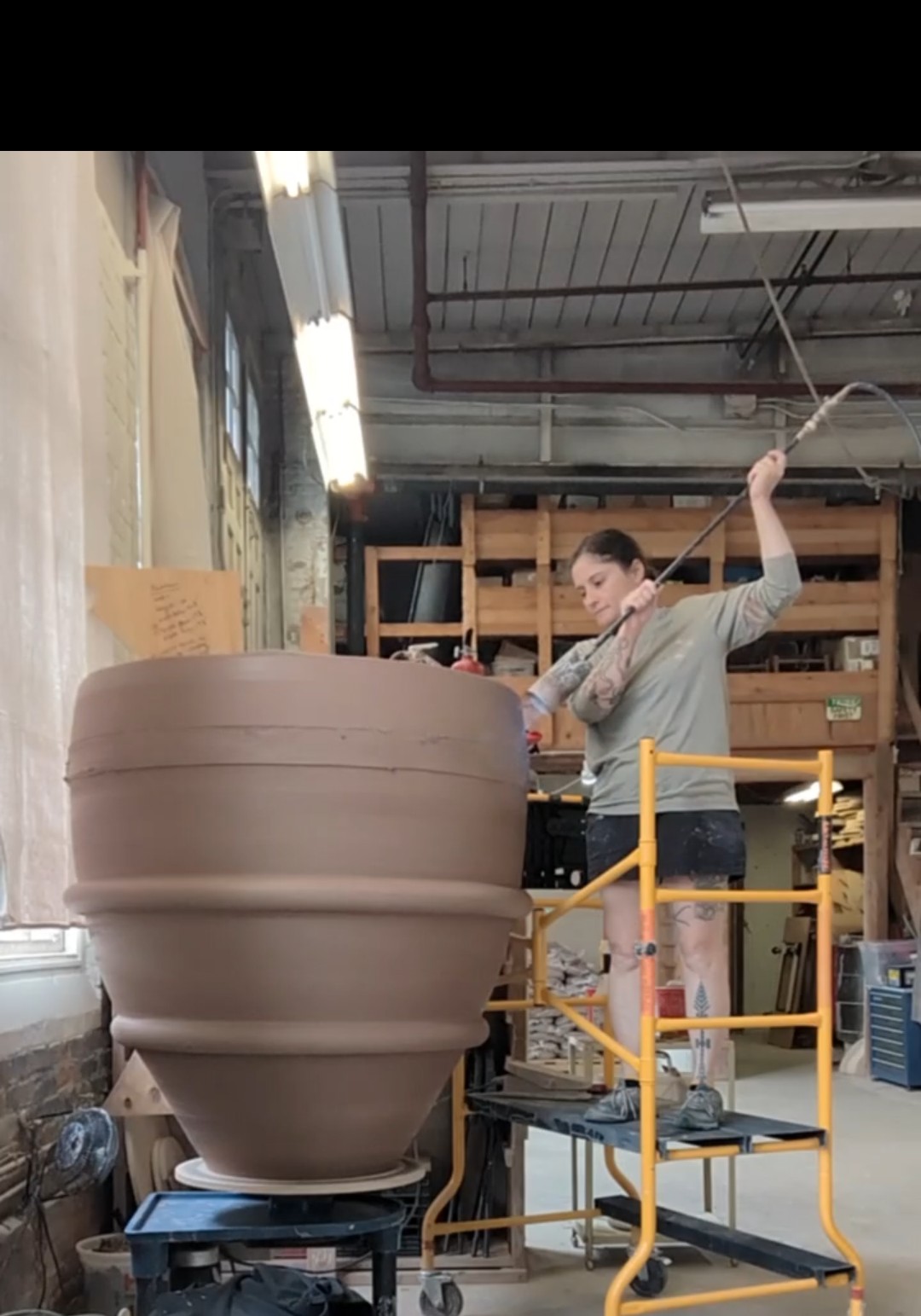
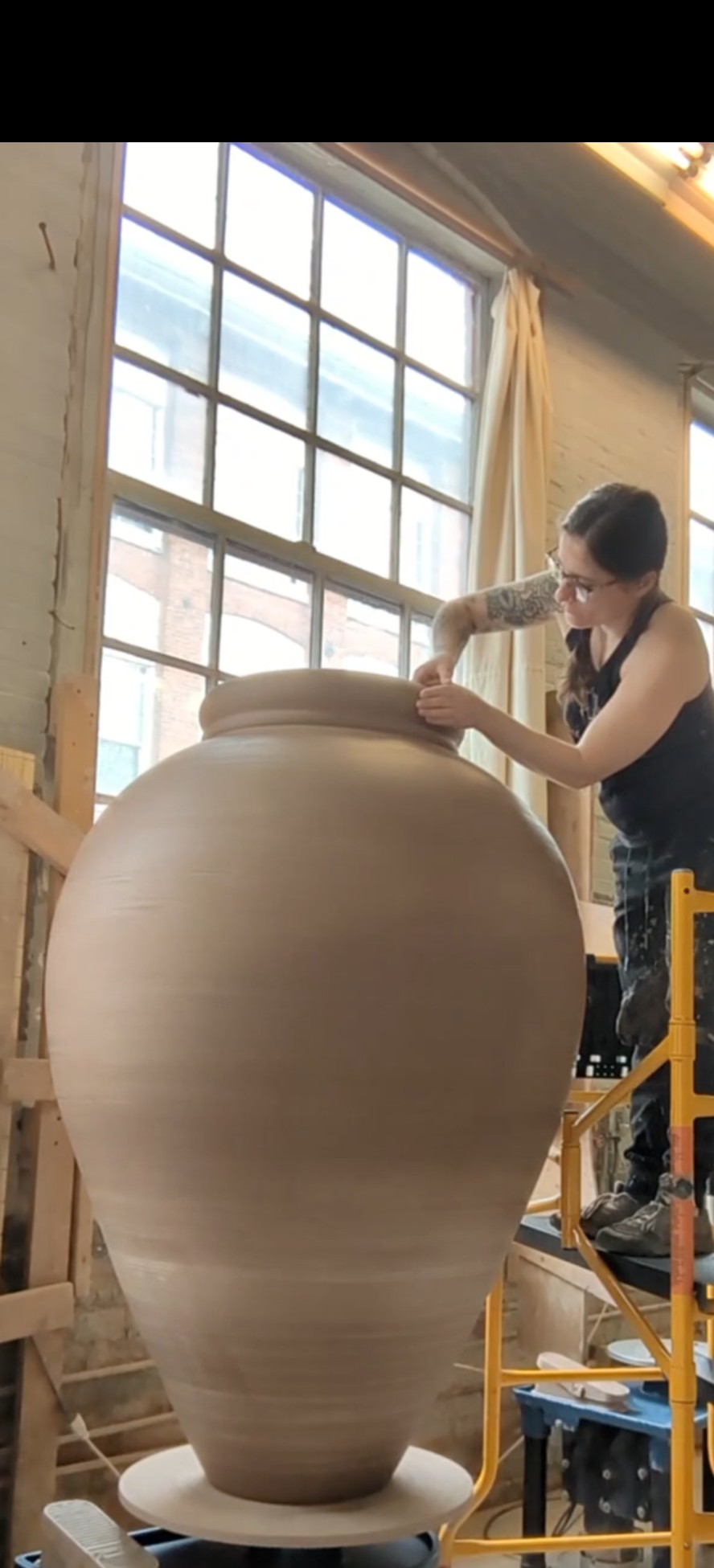
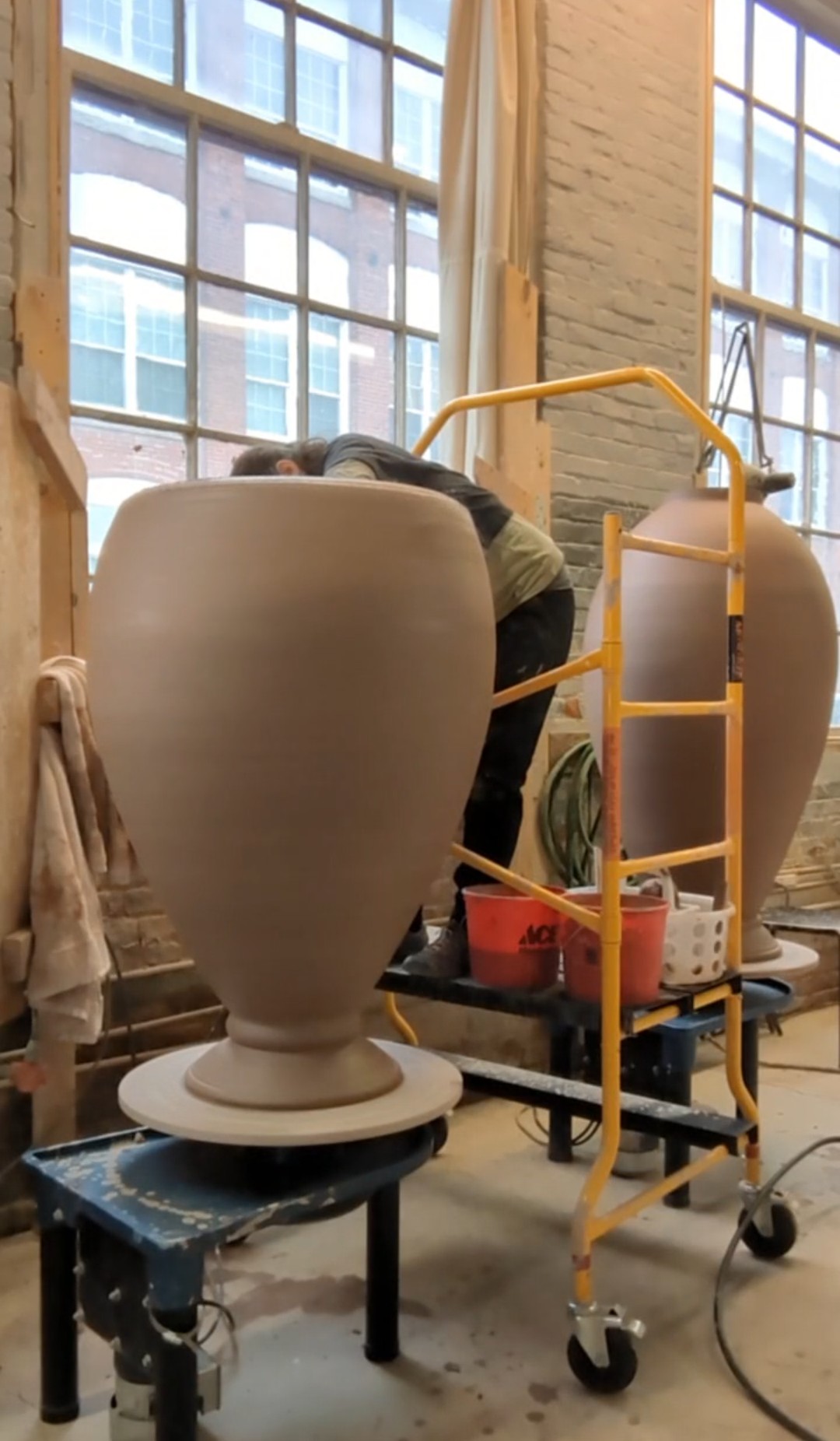
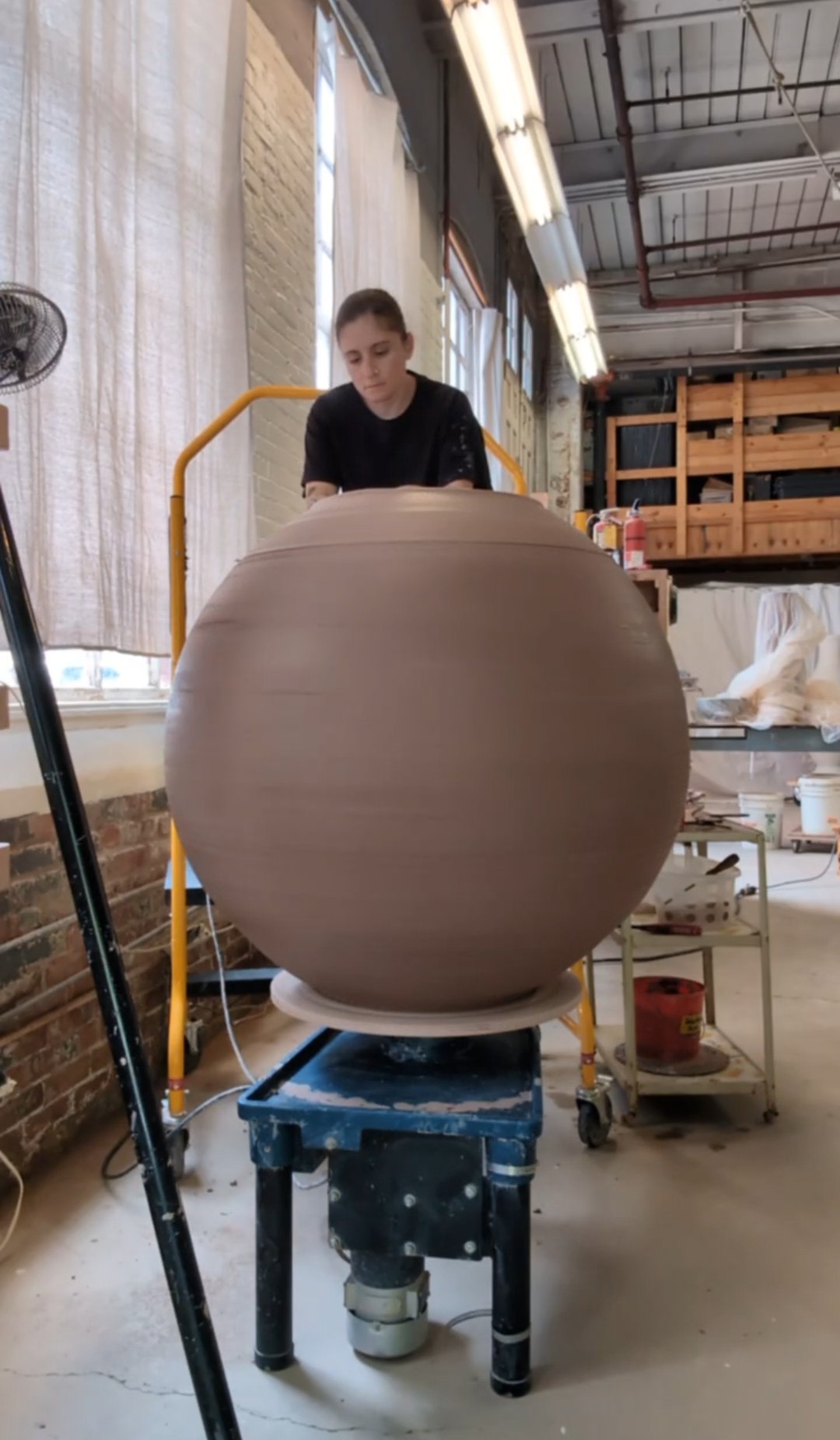
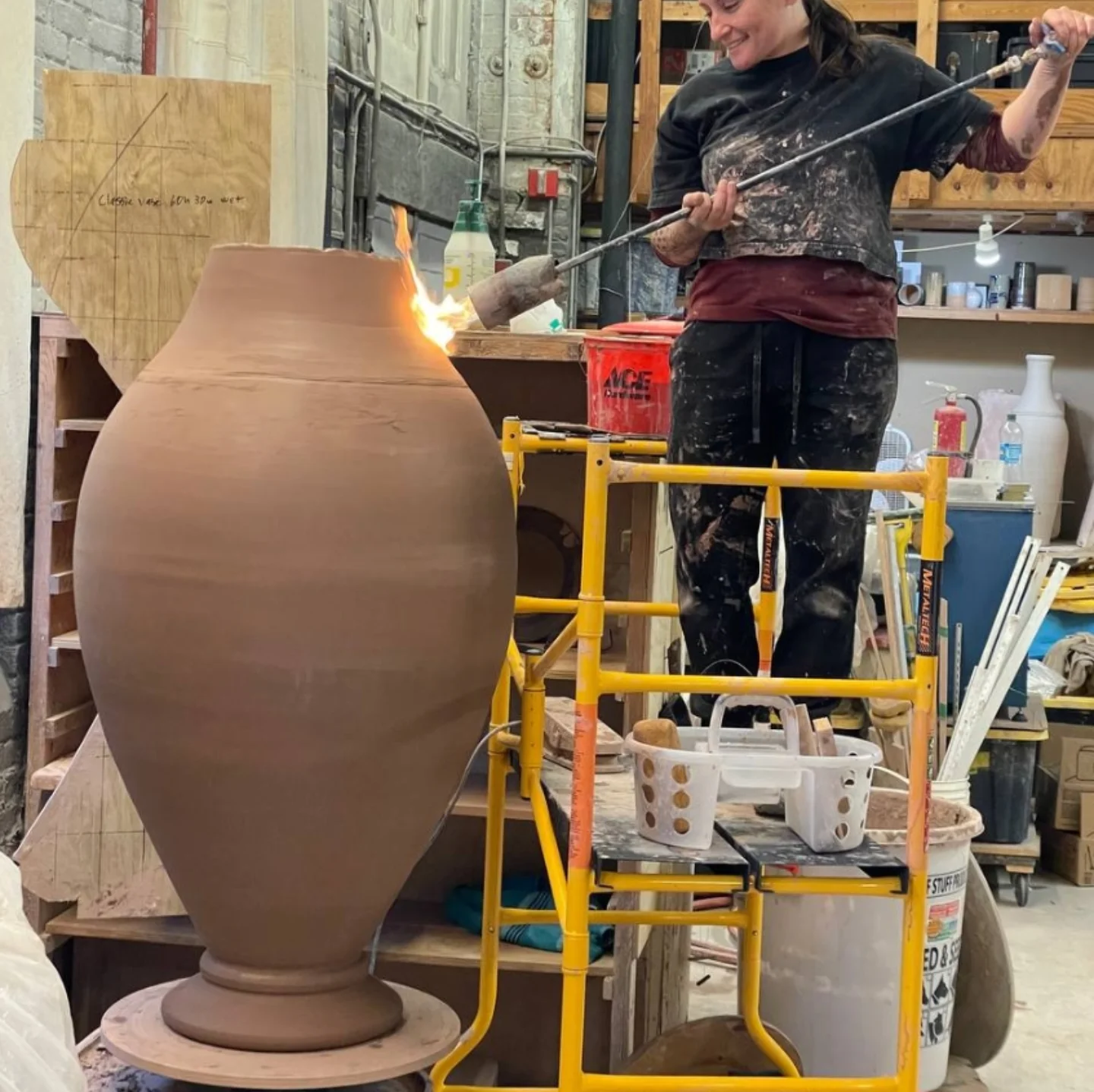
Large pots aren’t simply oversized bowls. They demand a different rhythm and a deeper understanding of the material. Many are thrown in sections and assembled piece by piece, transforming the process into equal parts engineering and artistry. Even if your own work stays small, the insights gained from large-scale techniques can change the way you approach every piece you make. The lessons are bigger than just the pots themselves.
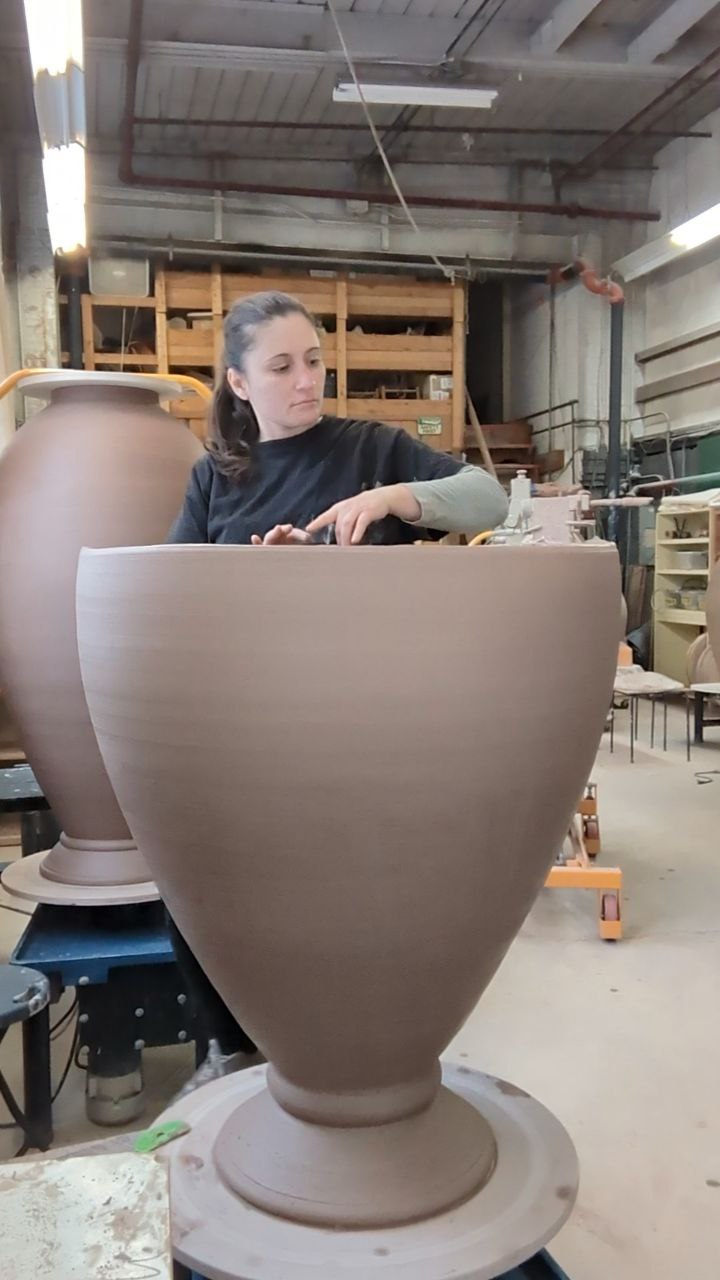
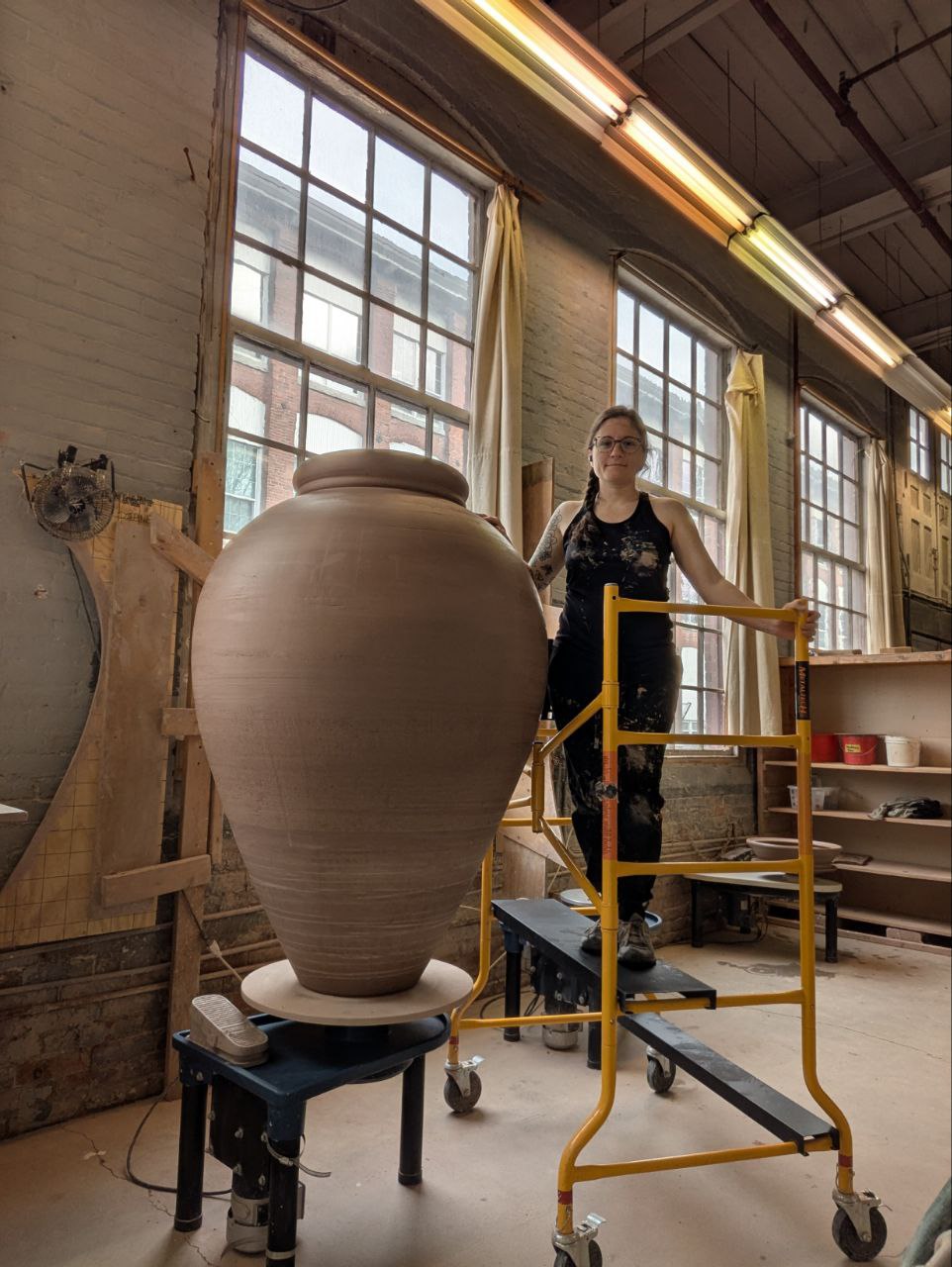
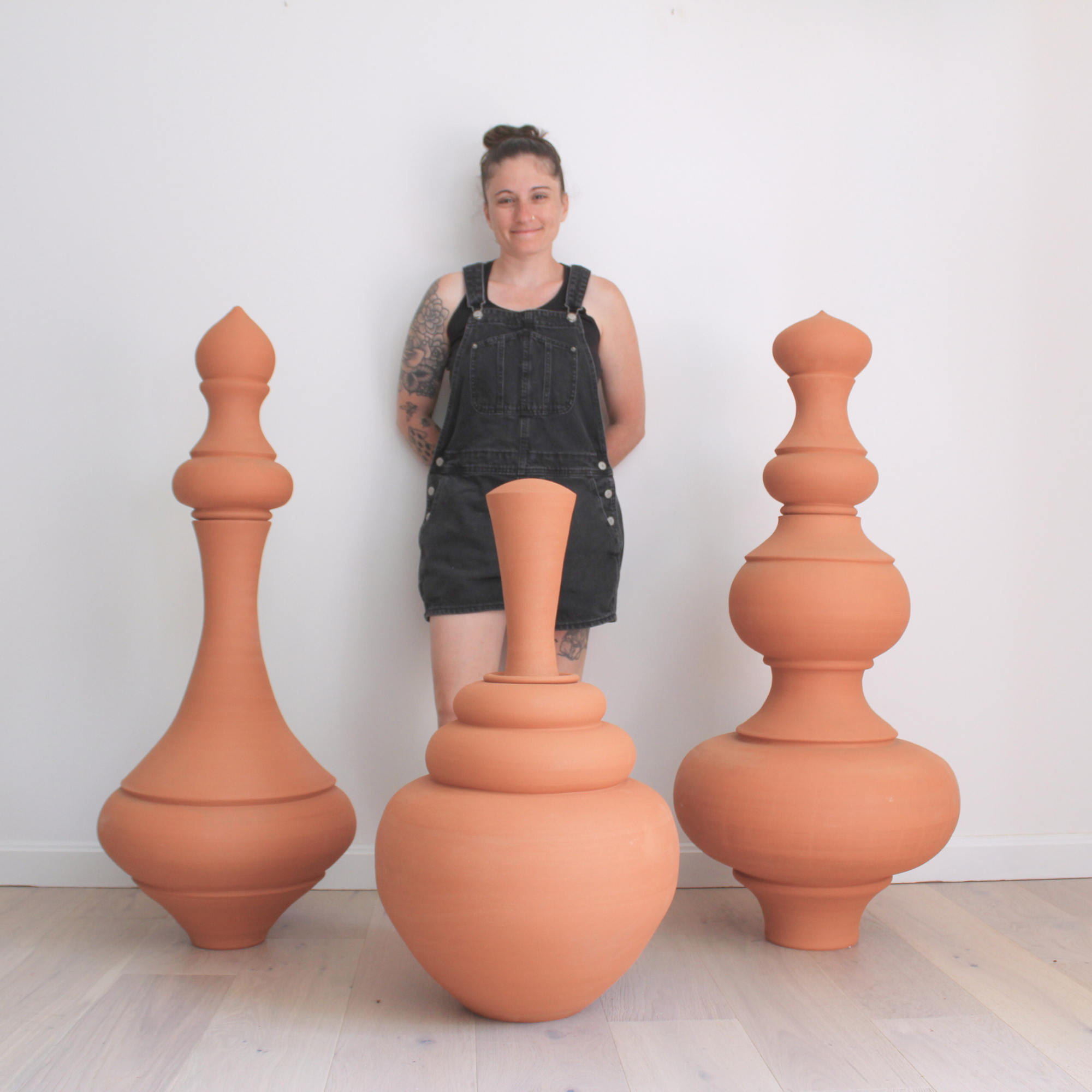
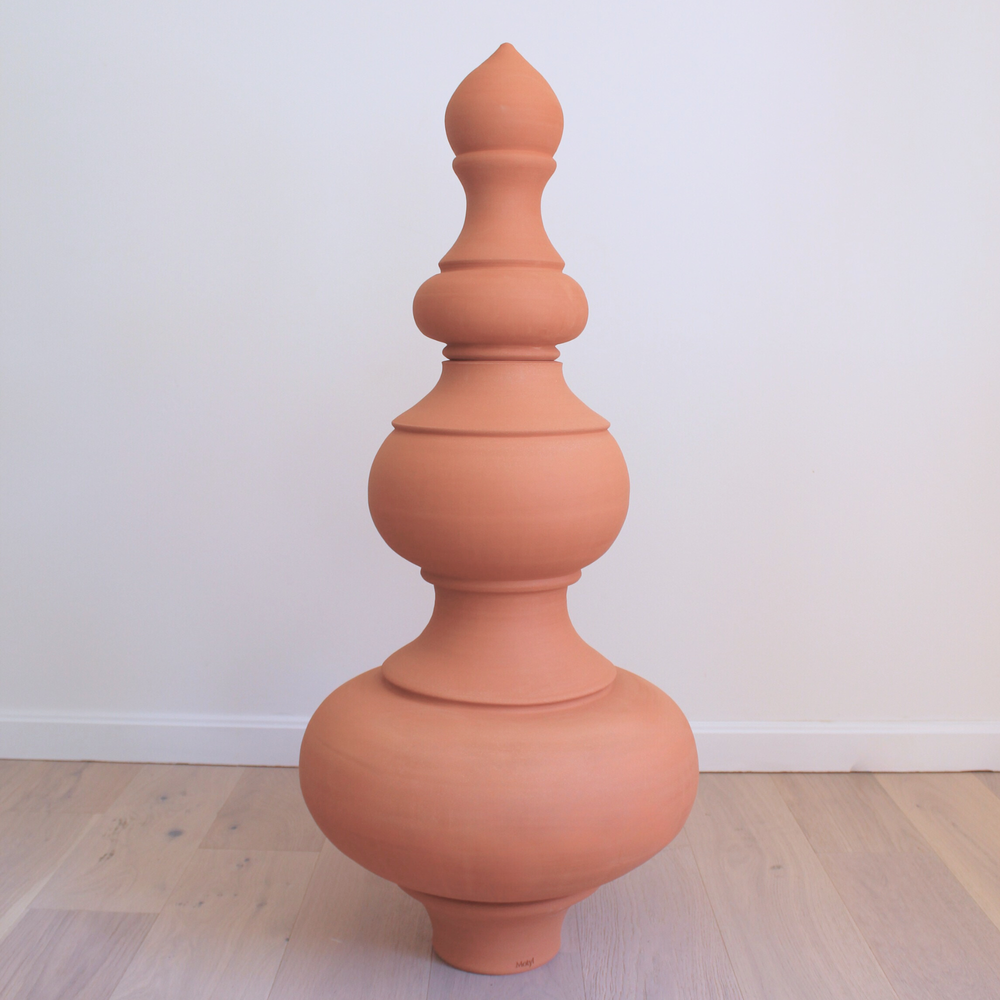
Tori Motyl is a TVP ISM Alum and former TVP Resident Potter. Currently based out of Vermont, Tori has made very big pots for clients such as Ralph Lauren and Wesley Cadle. Now, she’s bringing her years of study and skill back to TVP for this one-weekend demonstration and spectacle, “Engineering the Large Vessel,” July 11-12.
Don’t miss it!
You can follow Tori and her work on Insta @motylpottery, or on her website, https://www.motylpottery.com/.
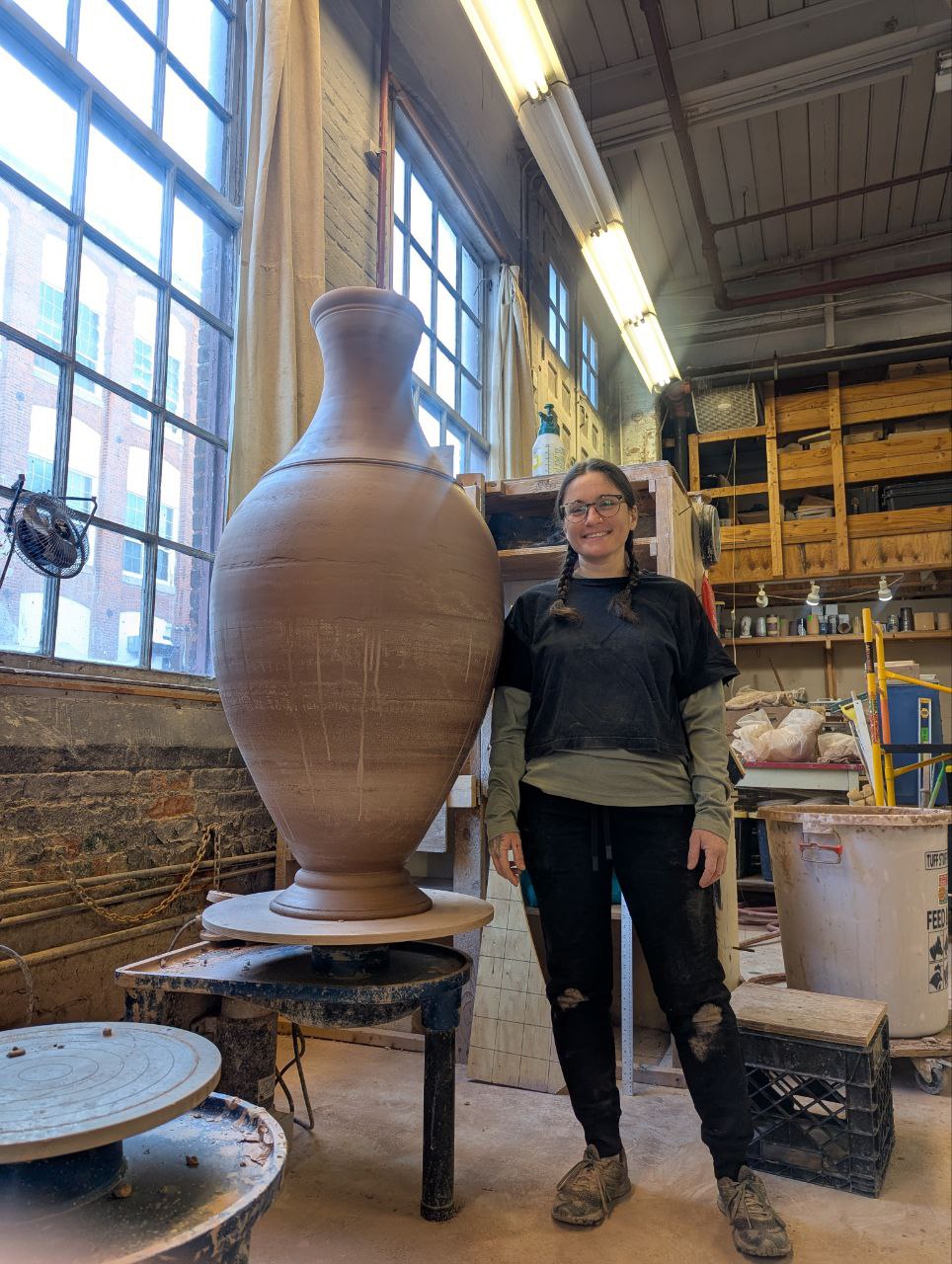
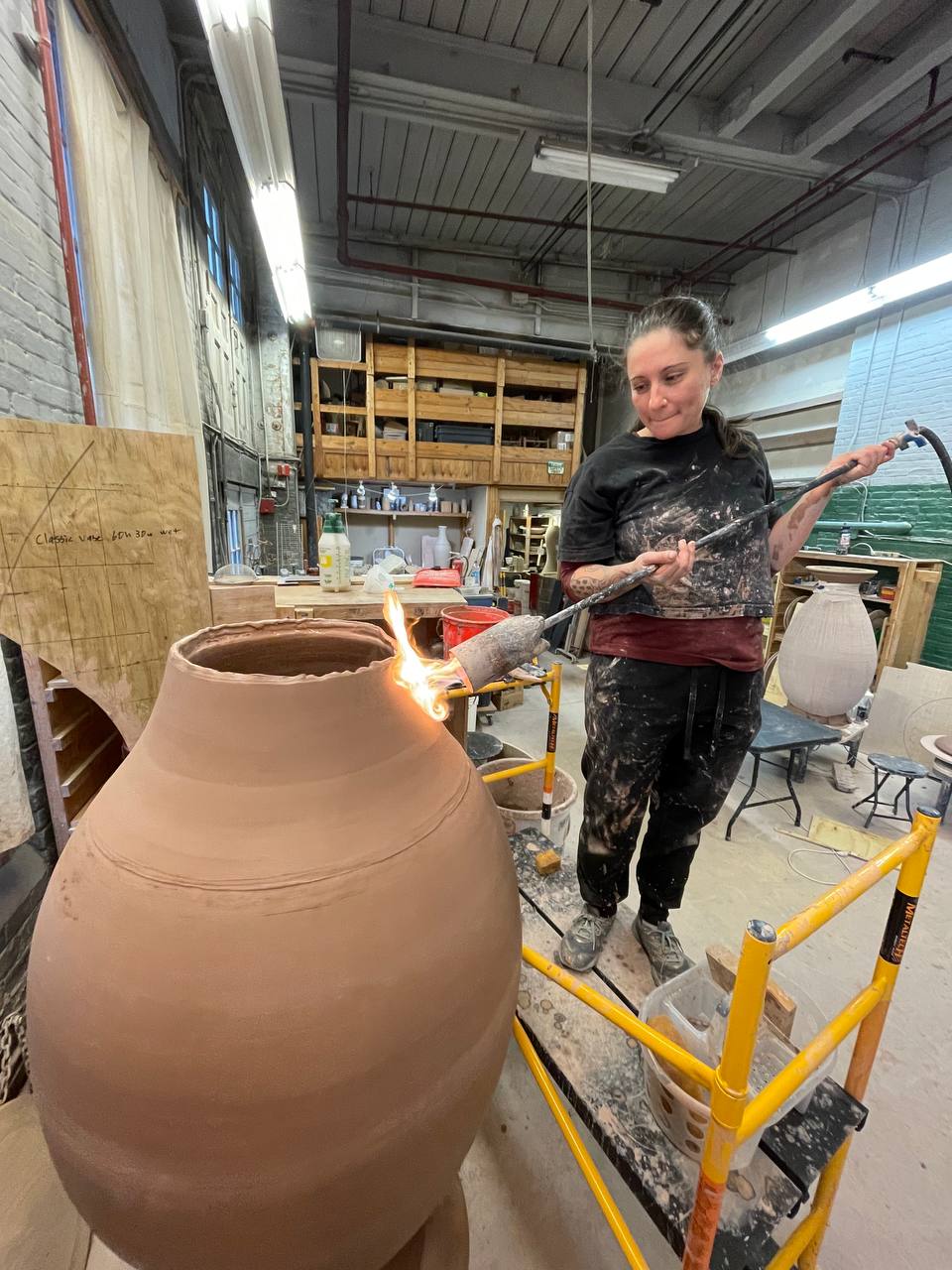
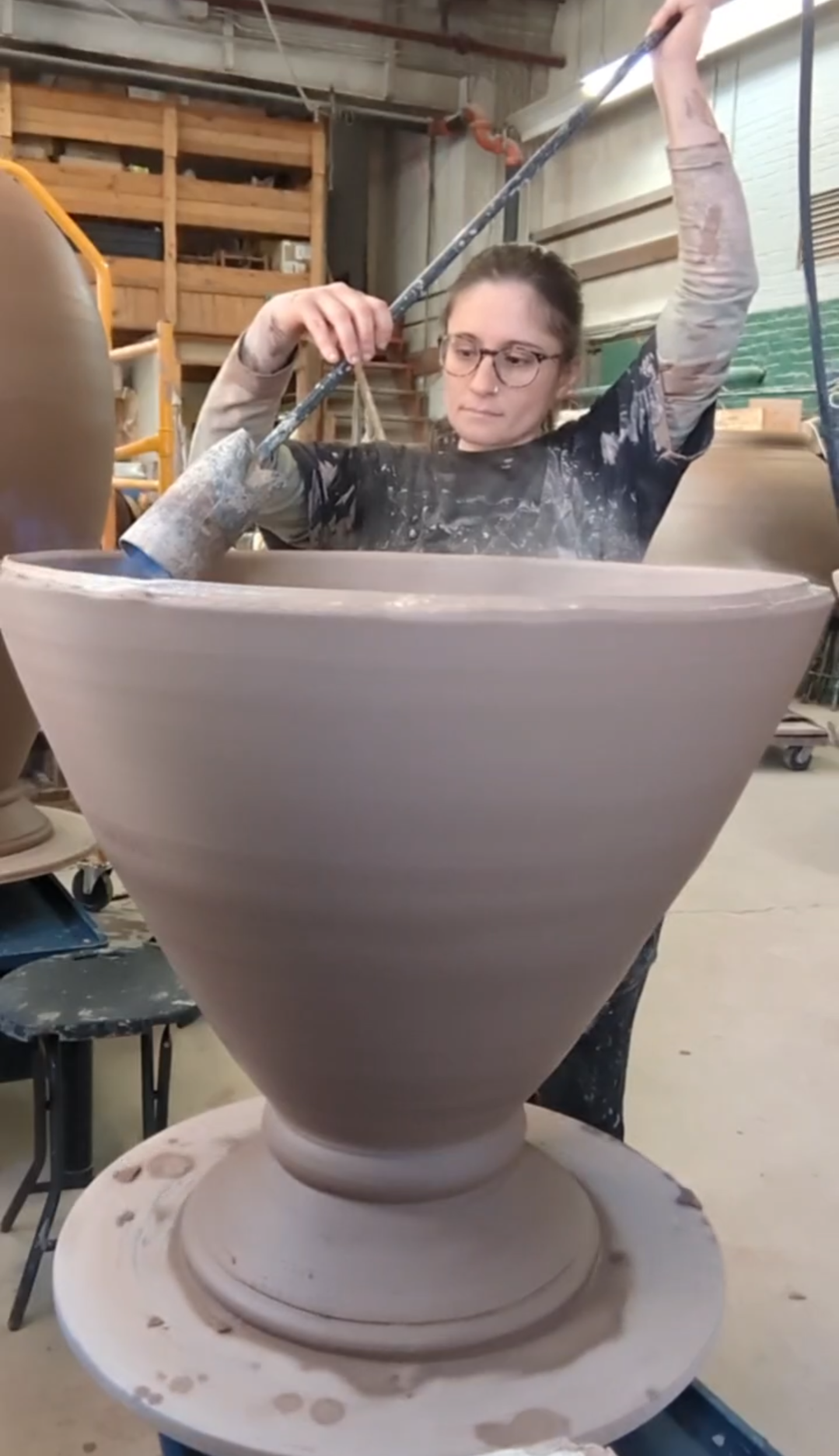
Q&A With Big-Pot Potter: Tori Motyl
Throwing big is such a fascinating topic, yet can seem intimidating for many potters, of all skill levels! We asked big-pot specialist, Tori Motyl, a few questions to demystify her approach to throwing at a larger scale. Tori is an Asheville potter who started her big pot journey at TVP studying under Sarah Wells Rolland. She continued honing her techniques and skills while working with Steven Proctor.
The Village Potters Clay Center: You first explored larger work while studying at The Village Potters. What drew you to making big pots, and how has that journey evolved since leaving Asheville?
Tori Motyl: What first drew me to big pots was the technical challenge. When I talk with other potters, we always have some part about making pots we love most. Some potters love glazing, some potters love trimming, some potters love slab building, and I have always loved throwing more than many other aspects of the making process. Learning to throw big pots was a way to challenge myself in the technique I enjoy most.
TVPCC: Watching you build a large vessel is almost like watching a performance. What is it about assembling these forms that still excites you every time?
TM: This is a great question because I have always thought of throwing as being like dancing – a series of choreographed movements that result in something (hopefully) beautiful. I am very process-oriented and, as I practice making forms, I am discovering and building my own personal library of shapes and details that feel authentic to my personal aesthetic. What excites me is that as I continue to practice, I see my own personal expression develop.
TVPCC: You’ve developed your own custom ribs and tools along the way. How did those come about, and what role do they play in creating your signature forms?
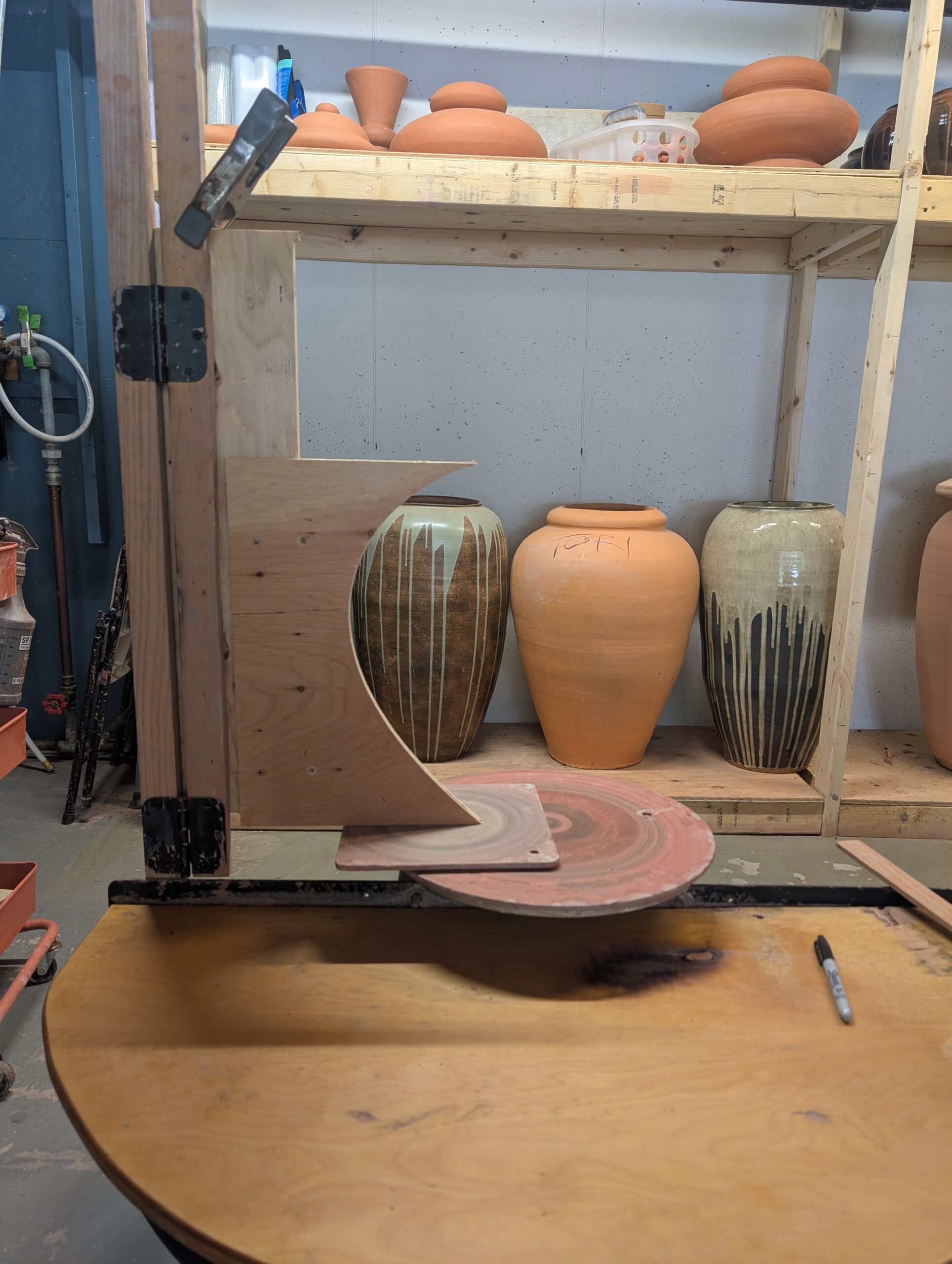
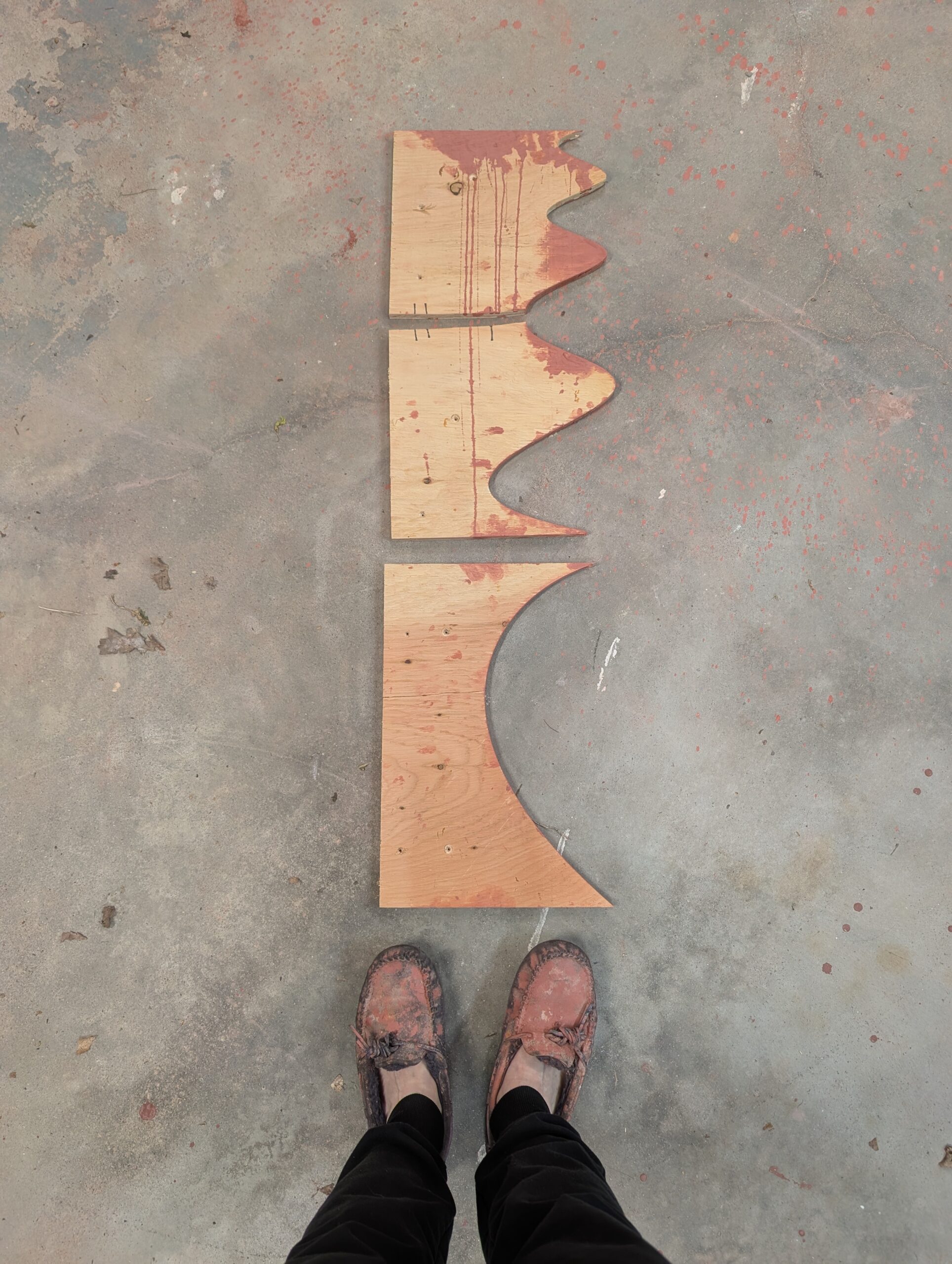
TM: Developing my own ribs and tools has been instrumental in realizing the precise forms I see in my mind. It started with exploring an old technique called Jarre A La Corde. This technique involves creating an internal armature and external jig that together help to form a pot on the wheel. After a few years of exploring this technique, I took a job that involved throwing pots with the external jig only, dropping the internal armature from the process. This opened up the range of shapes that could be created. Now I could explore complex profiles whereas before I was limited to simple curves. Learning CAD and CNC machining became crucial to designing and cutting my own jigs and ribs. There are additional technical details and design processes that go into this that I am looking forward to explaining and discussing in the workshop.
TVPCC: Many potters dream about making bigger work but feel intimidated. What’s the biggest misconception people have about throwing large, and what advice would you give someone who’s curious to try?
TM: Big pots can absolutely—and unnecessarily—feel intimidating, and the biggest misconception I have encountered is that learning the technique is for advanced potters only. This couldn’t be further from the truth. I always tell my students that if you can center and throw any amount of clay consistently, you can learn to throw big pots. Also, you don’t have to be strong or big or work out to make big pots. Making big pots is the same as making small pots, it’s about technique, finesse, and practice. My advice to someone who wants to try making big pots is absolutely, 100%, do it. If it feels daunting, find a mentor. (Might I suggest the amazing resident artists at The Village Potters?)
TVPCC: What are some of the techniques or problem-solving strategies you’ll be sharing during the demonstration that attendees might be able to apply to their own work, even if they don’t plan to make giant pots?
TM: My workshop isn’t just about throwing big, it’s about throwing precisely and about creating good design that reflects your authentic voice as an artist. We will talk about how to make the exact shape in your head by developing tools that are unique to your personal visual library – not just by using CAD and CNC machining, but ways you can create simple custom tools in your kitchen so that your pots are truly your own at any scale.
TVPCC: Thank you Tori! We truly can’t wait to see what you build in your demo next month!
Click to register for Tori’s July 2026 workshop, “Engineering the Large Vessel.”